
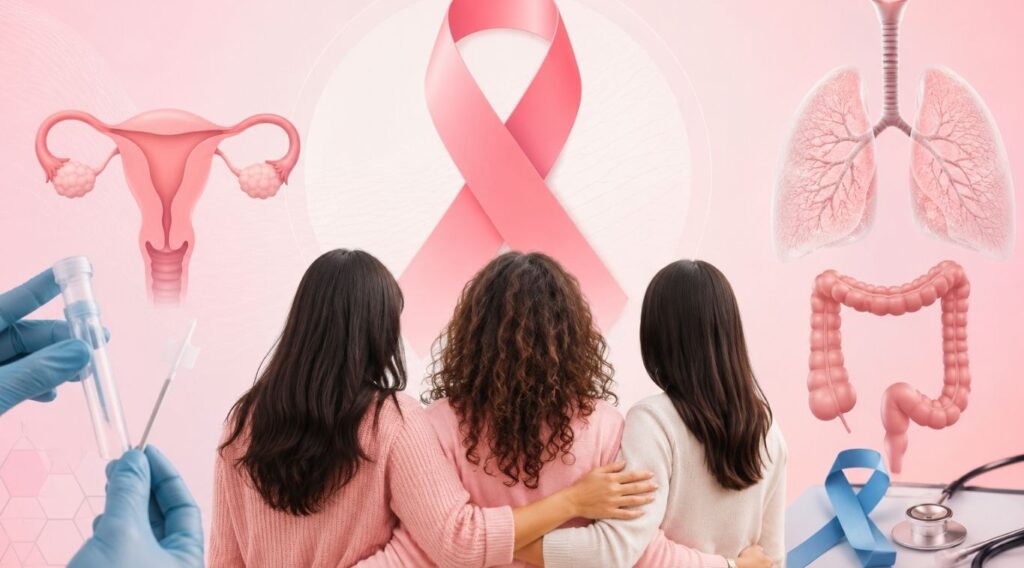
Cancer screening is one of the most powerful tools in modern medicine. It allows us to detect cancer — or pre-cancerous changes — before symptoms appear, when treatment is most effective and survival rates are highest. Yet in India, screening uptake remains alarmingly low.
What Is Cancer Screening?
Cancer screening involves testing healthy, asymptomatic individuals to detect cancer at an early stage or identify pre-cancerous conditions before they progress. Screening is different from diagnostic testing, which is performed when a person already has symptoms. Effective screening tests have well-established evidence bases, reasonable accuracy (high sensitivity and specificity), accessibility, and a demonstrable impact on mortality. Not every cancer has an effective screening test — but for those that do, the evidence for screening is compelling.
Breast Cancer Screening
Mammography remains the gold standard for breast cancer screening, recommended annually or biennially from age 40–50 depending on individual risk. Women with a family history of breast cancer, dense breast tissue, or known BRCA mutations may be advised to begin earlier and may benefit from supplemental MRI screening. Clinical breast examination and breast self-awareness also play a role in early detection. At Cancer Conscious Clinics, we assess each woman’s individual risk profile to create a tailored screening schedule.
Cervical Cancer Screening
Cervical cancer is almost entirely preventable through a combination of HPV vaccination and regular screening. The Pap smear (cervical cytology) detects pre-cancerous changes in cervical cells before they progress to cancer. The HPV test detects the presence of high-risk HPV strains. Current guidelines recommend Pap smears every 3 years from age 21, or Pap + HPV co-testing every 5 years from age 30. In India, where cervical cancer is the second most common cancer in women, regular screening is particularly critical.
Colorectal Cancer Screening
Colorectal cancer is the third most common cancer globally and one of the most preventable through screening. Colonoscopy can detect and remove pre-cancerous polyps before they become malignant — making it both a screening and a preventive procedure. Guidelines recommend screening from age 45 for average-risk individuals, and earlier for those with a family history. Non-invasive options such as faecal immunochemical tests (FIT) and stool DNA tests are also available for those who prefer alternatives to colonoscopy.
Lung and Prostate Cancer Screening
Low-dose CT (LDCT) scanning for lung cancer is recommended for heavy smokers aged 50–80 with a 20+ pack-year smoking history. It has been shown to reduce lung cancer mortality by 20% in high-risk populations. Prostate cancer screening with PSA (prostate-specific antigen) testing is more complex — it should be individualised based on risk factors and discussed thoroughly with a specialist, as it carries risks of over-detection and over-treatment alongside its benefits.
When breast cancer is caught at Stage 1, the 5-year survival rate is very high. When caught at Stage 4, it drops to approximately 28%.
Practical Tips for You
- Do not wait for symptoms — by then, cancer is often at a later stage.
- Create a personalised screening calendar based on your age, gender, and risk factors.
- Ensure female family members are up to date with cervical and breast screening.
- HPV vaccination is effective even at younger age and offers significant protection.
- Complete all recommended follow-up tests — a positive screen is not a diagnosis.
Ready to take your next step?
Book a consultation | Take your free Cancer Risk Assessment | Join our Cancer Wellness Community
cancerconsciousclinic.com | +91 7075946029 | Hitech City, Hyderabad, India